
Japan Trip 2026: Whisky & Shochu
April 15th, 2026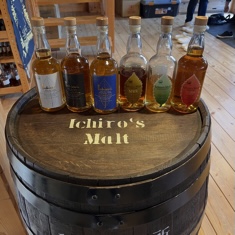
Two years after touring whisky distilleries in Scotland, and almost ten years after touring Yoichi Distillery in Hokkaido Japan, I returned to Japan to tour twelve more distilleries to learn more about how whisky, shochu and even gin is made.
This tour was lead by Charles from Rascal + Thorn. He is also @whiskey_traveling on Instagram so I will embed his almost daily summaries of our time together in Japan. Also on this tour was Stamford who is @japan_whisky_tours on Instagram. He made less posts than Charles, but more than me to the ‘Gram. I don’t use Instagram all that much, but I have been uploading my best photos to this Flickr album. There were a number of other whisky enthusiasts or maniacs as Stamford kept calling us on this tour. So more images may have already have appeared on social media, I know I took over 1000 photos while in Japan.
The embedded Instagram posts may work until they don’t this is why I prefer Flickr after twenty plus years in the blogosphere.
Executive Summary of Japan Whisky Tour
When I was planning this trip, of course I was planning to update my blog afterwards. I decided to divide the trip into six blog posts of which this was the fifth to be written and thus the penultimate blog post of the series. However as it became longer and longer and I realized it is unlikely many people will read it. This didn’t overly bother me as I learned a lot writing it and most of my blog posts, few people read.
There are entirely too many experts out there telling you how to become a social media influencer. Yoast the former of employer of Joost suggests a blog post be at least 300 words, this post is over six thousand. I had always planned for the last post in the series to be a summary. However, as it has taken me weeks to partially write five blogs posts, the final summary post may still be another week away, hence the executive summary, for people who lack commitment to read.
In March of 2026, several adventurous individuals met up in Tokyo, travelled to Chichibu, Kagoshima, Kumamoto, Fukuoka and various places in between to tour the following distilleries:
We also visited the following whisky bars:
- Aloha
- Milwaukee
- The Highlander Inn: Chichibu
- Te Airigh
- BB13 Bar
- Bar Masquerade
- Bar Amber
- Bar Higuchi
- Bar Kitchen
It is possible some people did some extra drinking, you know had a beer or two with their ramen, tonkatsu, sushi, sashimi, yakitori, udon, or soba. But fear not, temples and shrines were visited, photographs were taken, shopping was done, but the really short summary is twelve distilleries were toured and this post documents that fact in some depth.
Tokyo
Our official tour itinerary was to start at 11:00 AM at a train station in Tokyo, but no way was I cutting it that close and I think everyone arrived a day or two earlier in Japan. Most of us stayed at the same hotel in Minato, a district in Tokyo I may never have visited before. We did travel around together in Tokyo including up Tokyo Tower, which I survived. Later we went to two whisky bars: Milwaukee and Aloha.

I already wrote an entire post about visiting Tokyo again. I had previously visited first in 1992. I even dug out an old baseball cap for a J-League soccer team from that time to wear throughout this trip. Note the Cleveland Browns hat and X-men Issue #1 Jim Lee t-shirt in the picture below, some of us are true diehards.

Chichibu
Chichibu is famous for more than just Chichibu Distillery but it is doubtful we would have spent two nights there if not for the distillery. We of course saw shrines, ate Japanese food, I even got some ramen, people did some shopping, but the highlight was a private tour of Chichibu Distillery.

The story of Chichibu Distillery has been told many times now, I think I had to tell it the other night over drams. Basically the founder Ichiro bought up the last of the whisky made by his grandfather and then opened one of the first new whisky distilleries in Japan in years. He had previously worked for Suntory, his child may work there now. Here is a detailed account of touring the distillery by Thomas of Whisky Saga.
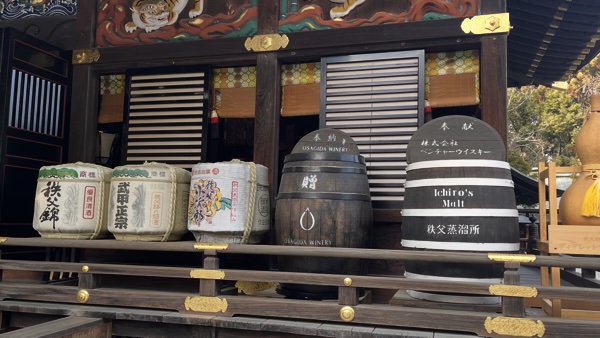
Chichibu Distillery is a bit old fashioned, they were even doing some floor malting while we were there. They do have an official Instagram, but perhaps not a website. Generally they don’t do tours, however they do have a gift shop so they must do some, supposedly only for industry folks. You may have to buy the bottles in town and we learned many businesses have prospered alongside the growth of the distillery. For instance, there is a whisky cask in the Shinto Shrine.
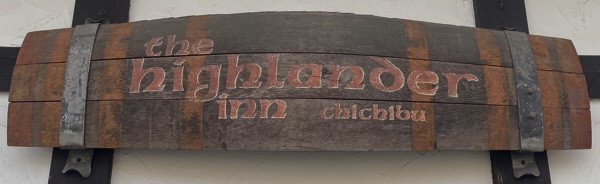
For a town the size of Chichibu, it has a disproportionate number of whisky bars. We visited Te Airigh @te.airigh the first night and the Highlander Inn @highlander_inn_chichibu the second night. That was an expensive night for Mr. Hamilton, but at least he remembers buying the rounds, some people seem to not recollect we stopped for pizza and beer on the way back to the hotel. We never quite made it to Craic, but we did try the first night in Chichibu. Charles and Stamford have been there many times and recommend it.
Te Airigh


Both Te Airigh and the Highlander Inn served Black Isle beer. Now I didn’t tour that brewery but I almost stayed at it. It is in Inverness or near Inverness. I also visited the original Highlander Inn as part of the Highland Whisky Academy with Mike. He’s been busy, I read he’s expanding his businesses. I gave Charles and Stamford the few contacts I had in Scotland, or at least their Instagrams, so we’ll see if they cross paths someday.
Highlander Inn
Chichibu Distillery

More of the town of Chichibu
Getting to and from Chichibu can be done by train. You need to hire a car or taxi to get to the distillery but it isn’t far from town. The town of Chichibu isn’t very big. We basically just walked everywhere except the train station as some people had a lot of luggage, which became a whole lot of luggage as the trip went on they bought more and more “souvenirs”.
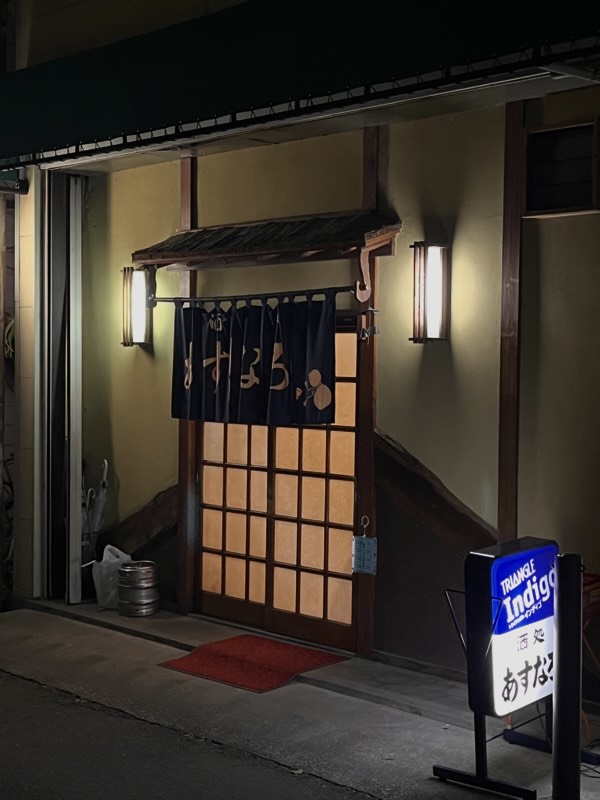

I even managed to do the laundry in Chichibu. The hotel also gave us a token we could spend at the beer vending machine, so I got the biggest strongest beer they had. There are not a lot of hotel options in Chichibu and the one we stayed at is considered the best, it is called the Hotel Route Inn Grand. It had the best washing machine / combo dryer we encountered on our whole trip.
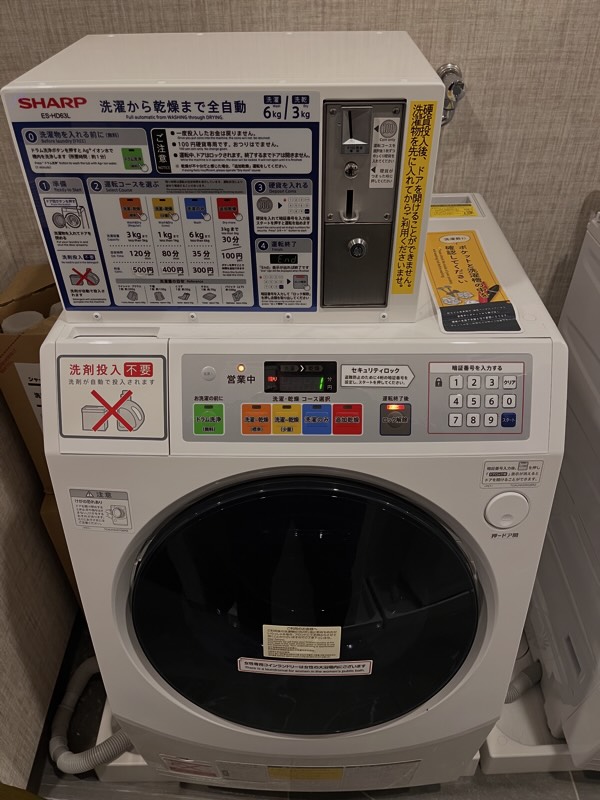
Coin laundry technology has improved over the last twenty years, of course I think I stayed at nicer hotels this trip than I did back in the day. Later in Fukuoka I even skipped out on drinking whisky once to use an inferior laundry machine that took hours to dry my clothes.
Kagoshima
We flew to Kagoshima, but as we started the day in Chichibu, some of us may have been a tad green in the gills. It was two taxis to the train station, then the train back to Tokyo, then probably a subway or two, then the airport shuttle, then we had time to kill at Haneda Airport. So the first night in Kagoshima we did not do much drinking, we did famously go for Unagi but ended up not getting any Unagi at the Unagi restaurant because they were out of Unagi.
Mars Tsunuki Distillery
This was the first distillery we visited in Kyushu. I wrote about all the other things we did in Kyushu which consisted of a lot of driving but we also took trains and trams. Mars Tsunuki is named after the brightest star in the sky, which of course turned out to be a planet. The distillery sits on the site of an even older distillery and the distillery is still owned by the family and their ancestral home is now the tasting room.
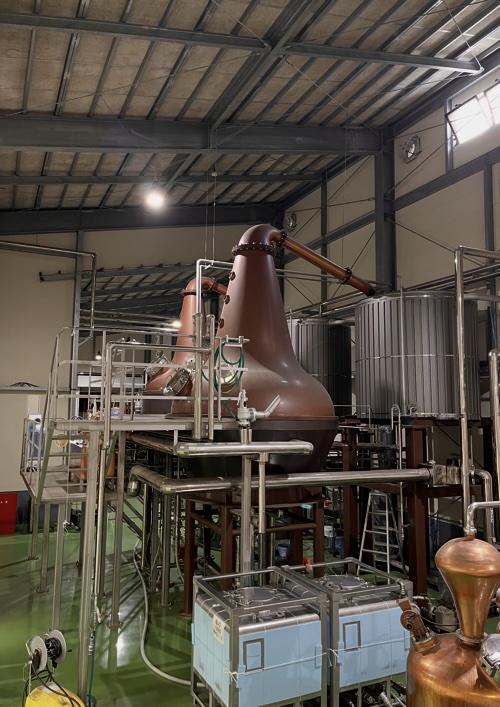
There are dunnage style warehouses and even a column still in which they make gin. We got to try three drams, then a bonus dram. Everyone agreed the bonus dram was the best. It was a Mizanura single cask. We inquired about buying a bottle as everyone wanted one including both guides, in the end none of a us got a bottle. Let that be a lesson kids, don’t be greedy.

Inside the tasting room, besides a store where I got omiyage for someone in Tokyo, is also a bar where you can buy more drams. I only bought one more dram and even though we were told we could, I don’t think anyone took their drams outside into the Japanese garden. I did go out and explored the garden and took a bunch of photos some of which I uploaded to Flickr. Eventually our tour ended and we boarded our jumbo taxi to head towards the next distillery but first we had lunch on the beach.
There aren’t many accounts of touring Mars Tsunuki Distillery in English, but they have been on people’s radar for a while.
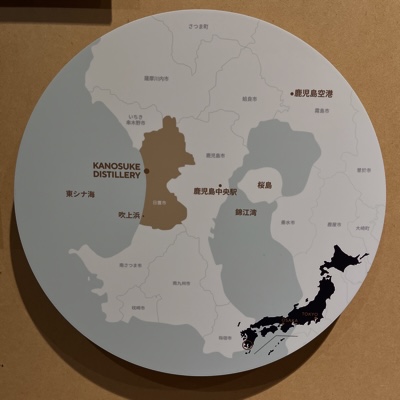
Kanosuke Distillery
This was the second distillery we visited in Kyushu. We visited it the same day we visited Mars Tsunuki Distillery, after our lunch by the seaside. This lunch had an amazing view but it might have been the third most popular place we stopped for lunch in Kyushu. The most popular distillery we visited was probably Chichibu but once we were on Kyushu there was definitely some friendly competition for best distillery tour on the Southernmost Island.
I seem to be more forgiving than some, I mean any day you get to tour a whisky distillery is a good day.

The host at Kanosuke distillery spoke good English even though his accent was hard to place. As a former English teacher I suspect he learned English in two different places or from two different primary sources or teachers. Some of his pronunciation reminded me of an Anzac accent but he didn’t use words like “heaps”. I had a Kiwi rugby coach once so I know if you don’t say “heaps” every 23rd word you’re not a real Kiwi.
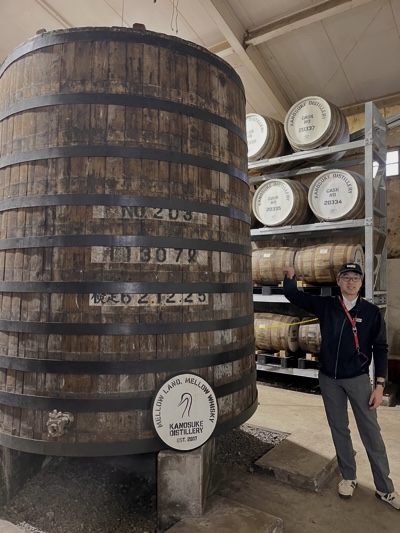
Beyond his pronunciation, he was really informative and tried really hard. I forget how many whisky distilleries he had visited, but it was more than me, and it included if not every distillery we toured in Japan then most of them. So he was often contrasting how things were done at Kanosuke versus Mars or some other distillery.
If you thought the tasting room at Mars Tsunuki overlooking a Japanese garden would be tough to beat, the tasting room at Kanosuke, the Mellow Bar, overlooks a beach and you get to pick your own vinyl record. Van the Man was playing when we arrived, but we switched to Nina Simone at Stamford’s insistence. Maybe next time, he who owns the most vinyl gets to choose the record, just a suggestion for a house rule.

Kanosuke has a gift shop where I got a small distillery exclusive recharred shochu cask whisky bottle for me and one for Bill too. Konosuke apparently uses a greater percentage of recharred shochu casks in their whisky than most distillers in Japan. Many of the distilleries we toured in Japan started out making shochu or even only made shochu. I was not the first blogger to tour this distillery.
BB13 Bar
I don’t know if BB13, @bb13bar on Instagram, is the best whisky bar in Kagoshima but it would be among the top whisky bars in Kagoshima. We did not visit on Sunday March 8th, neither my memory nor the metadata agree with the itinerary. What the bar is famous for is having a very large selection of bottles from Mars Tsunuki distillery including their most famous bottle which is 3 plus 25.

Luckily I took a picture of the bottle as I remembered the name wrong.
This whisky is a marriage of two old casks from two different distilleries which were then aged for an additional three years at another facility North of Kyushu. You can see the World Whiskies Awards sticker on the bottle above. It won best blended malt in the world in 2013. The other thing you can do in Japan is buy what they call a half measure. Normally when you order a whisky in America or elsewhere you’ll get one ounce. But in Japan they are going to measure everything in a jigger that is in millilitres. So a “half measure” is going to be half as many millilitres as a “full measure” which will be about an ounce.
This did not bother me, I can’t remember what a half measure of this particular award winning whisky cost that night, but ordering a half measure allows you try more whiskies and not feel bad about it. You can always order more whisky or even a beer. I ordered a beer at BB13 which was from a brewery we’d never seen before, so eventually more people tried their beer. The beer is called Ogna but the brewery might be called Komagatake.

BB13 also might have a full kitchen, something we did not know about as maybe Charles and Stamford had never been there. We’d actually gone for ramen on our way to the whisky bar but you could dine and enjoy drams afterwards if you are too classy for random ramen and beer.
Hinokami Distillery
This distillery is in a rural part of Kyushu, so you may get some rural smells as you drive up. The distillery is really new but has this big Brutalist visiting centre. They don’t have a lot of whisky they can sell you, but they do have newmake and have already started winning awards.

The distillery itself resembles a glass cube. They also have cooperage where they assemble and repair barrels. This is another distillery that has extensive experience in making shochu. Their tasting room also has a view of a volcano. They call it the Red Bar and there very much seems to be an arms race among shochu distilleries in Kyushu to move into whisky and awe visitors with views while they enjoy a dram.

I do believe we also got try some of their shochu. Clear shochu generally has not been aged for very long and certainly not in sherry casks from Spain. I don’t want to shock you, but just like whisky distilleries have been aging their spirit in wooden casks that previously held other spirits, the shochu producers have adopted the same technique and it does enhance the flavor. Shochu can also include ingredients other than barley, it is most commonly made with sweet potatoes and rice, but you can add something like plums similar to making a fruit beer. We would learn more and more about shochu as we toured more and more distilleries.

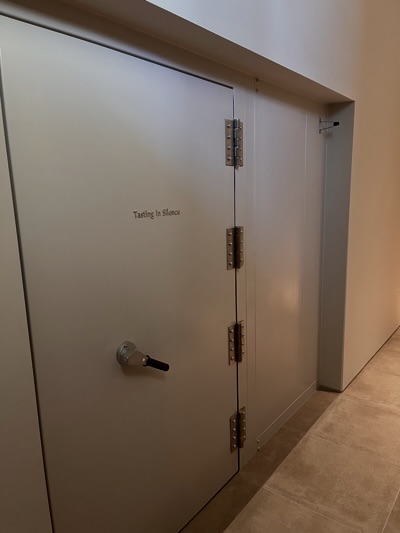
Hinokami has a second tasting room. It is anechoic chamber. Besides being a hard word to spell, when you are locked in a dark room with some people you just met and several stemmed glasses, shit could goes down. Obviously I’m exaggerating, but when I smelled the two drams I immediately got the peat note. The challenge was to decide which dram was 1% peated whisky in the formula. After a few minutes in the dark, doubt creeps in, but I stuck with my answer and apparently I was the most confident of my group.

Was I correct? Do you think I’d write five paragraphs about being wrong?
Actually, I probably would.
Akayane Distillery
The competition for favourite distillery may have been over in some people’s minds after we visited the very first one of the trip, however ranking distilleries or even drams is a personal choice. I don’t think any of us took detailed tasting notes like the Swedes did while I was in Scotland, however this distillery was among the least popular of the trip.
I however, liked it. It was full of surprises. This is where we may have got our first in depth instruction into shochu making. They do have a view of the volcano just not from the tasting room. The reason other people didn’t like it I can only speculate. One they didn’t have any whisky for us to try. It isn’t that they are not making whisky, but we mostly tasted gin and other spirits. The owner or president actually showed up mid-tour, but mainly I just think this tour was long.

These clay vessels are used in the shochu making.

The shochu stills are not made of copper.

Column stills are usually used to make gin or grain whisky.

More stills at Akayane Distillery.

Yet another still, this one is made in Germany!

Alembic style still made by the Chalvignac Group in France.

More shochu aging in a ceramic vessel buried in the ground.
It is a fine balance between showing off your production facility and allowing the tour group to actually try your product. Akayane Distillery has no gift shop currently, but they gave us a gift and as long as you wanted to drink gin or mystery spirits you could drink as much as you wanted maybe. I was at the front and drank more gin than I’ve ever drank in my life. I felt bad as no one wanted to try their wares, he’d pull out another bottle and there were few volunteers to try the mystery spirit.

They had stills that were made in Japan, made in Germany, France even some made in Italy, this is detailed on their webpage. They didn’t have any that were made in Scotland, but they were clearly trying stuff and the consensus best spirit we tried was a bottle they could only market as “plum spirit”. In order to be shochu, the alcohol content cannot be too high, though I think you can add plums to shochu. In Scotland and indeed most countries, whisky must be at least 40% ABV, but shochu can be lower, plum spirit however, there are no rules with plum spirit and it might have been 60% ABV. Who knows, I don’t even think it had a label.
Ontake Distillery
Ontake Distillery must be closer to Kagoshima than some of the other distilleries we visited as we visited it just before we left Kagoshima to head to Kumamoto. This was the one I dubbed “the whisky distillery that shochu built”. Ontake is owned by Nishi Shuzo, a longtime shochu producer and we got to tour their shochu operations, we even got to try some shochu right from the cask.

These shochu stills look traditional, but are made of steel.

These tables are used for mixing the rice with koji which is done when making shochu.

These casks are aging shochu not whisky.

Shochu straight from the cask.

The view from the shochu tasting room at Ontake.
Next we drove to a building in which they make sake. Sake is apparently really sensitive so we could only look through a door at that facility, the actual whisky distillery is further up the mountain. I think we even annoyed the manager giving the tour as we immediately wanted to snap photos of the view. You can see why below.

Nishi Shuzo are actually still building the visitor centre and they are also modifying the golf course and adding a hotel, so in the near future you could stay on the side of the mountain enjoying the view whether from the golf course, your hotel room, a hot spring, or if you’re facing the right way, from the tasting room inside the whisky distillery. Now you’ll see why I described the whisky distilleries in Kyushu as being in an arms race, some firms are investing a lot of money both to increase production capacity but also to capture dollars from whisky tourism.

Apparently I am not the first blogger to tour this distillery and be impressed by the view. A perk for being a golf club member is you can have your own private whisky cask. I didn’t forget this, I just have been typing so much I got carpel tunnel syndrome. I’m of course jesting, but this post has turned out to be beyond long.

Here is an interview with Yoichiro Nishi, the CEO of the company behind this distillery, explaining why they built a distillery on a golf course overlooking a volcano.

The actual Ontake Distillery as viewed coming back from the warehouse.

The actual whisky made by Ontake Distillery.
Kumamoto
Amazingly after all this typing, I’m not even sure we are half way done summarizing the tour put on by Rascal + Thorn and Charles & Stamford. Kumamoto is bigger than Kagoshima but smaller than Fukuoka. This means there are more dining and drinking options in the Kumamoto, but we only stayed here two nights. The distilleries we visited were smaller and perhaps less famous, but they’ll all be more famous now that I have blogged about them. They all made shochu but the first one also made rice whisky. The last one had a single malt whisky among their products, I brought home a 200 ml bottle.
Kumamoto has a very famous mascot and you see him in the train station, at your hotel, and yes even on the bottles and boxes when you tour distilleries. His name is Kumamon. I think you can even meet him, our hotel was right by the train station as was an entire store devoted to him in which he appears regularly.

Fukano Distillery
Fukano is not one of the larger producers of shochu or rice whisky, but their product is available in North America and one of the people on the tour apparently has a fondness for it. At this distillery we got another explanation on how shochu is made and got to see ceramic pots that were made over one hundred years ago and are still buried in the ground at this distillery. Imagine how much shochu they have produced!

We also got to try various products, but I don’t think they had any rice whisky for us to try, some people do really like rice whiksy, but it isn’t made from barley so will not qualify as a single malt for you purists. On this day however we never got to try any. It is mainly sold on the export market with shochu dominating sales locally. There are quite a few reviews online. The distillery of course had product with Kumamon on the packaging. Manufacturers can use him on their packaging if their product comes from Kumamoto prefecture.
After touring this distillery we went for lunch which was another hit with this tour group, but the next distillery proved even more popular than this one.
Rokuchoshi Distillery
This distillery specialized in shochu including the aging and blending of it. Our tour was conducted basically by the owner and his son and we got to try at least five different products. There was considerable debate whether the more heavily sherried but younger shochu was better than older sherry matured shochu. In the end some people ended up buying both.

For the record I preferred the second to last dram, but I did not buy a bottle of either. Here are more professional reviews of their product than I could ever do. It is a real surprise that they store their sherry casks upstairs but they have a room which they try to control the climate of, including the humidity. I don’t know how many sherry casks they have full of shochu but quite a few. This distillery might have been a bit bigger and more famous than Fukano, but again my lack of detailed notes on still capacity is starting to show.


Amazingly according to my collection of photos we went to a third distillery this day, I think this is the only day we toured three distilleries in one day. Besides climate controlled aging in sherry casks, the packaging at Rokuchoshi is also famous, some of it was designed by Keisuke Serizawa. Besides winning awards their shochu was also chosen to be served at a prestigious French restaurant, I believe it has Michelin Stars for you foodies.
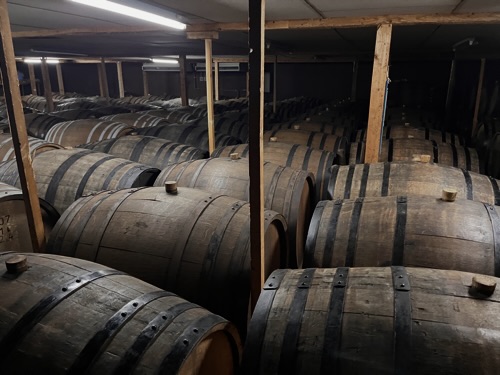
Oishi Distillery
Oishi Distillery also makes shochu but they are making whisky too. We got to try both and we were even given a small bottle of shochu. I actually bought another bottle of shochu. I was the only person who bought the bottle with the Japanese Giant Hornet in it.

It is interesting seeing the webpages of the distilleries we toured and recognizing people. The Oishi Distillery website features Kazunori Oishi who led our tour group. Presumably, a group of foreign tourists touring a dozen distilleries must be uncommon. As you can see on the website they also make whisky from rice, that was the theme of the day.
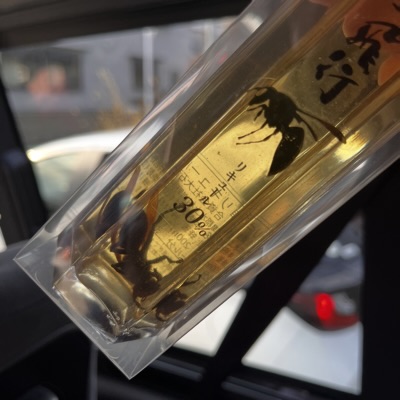
We did ask the owner why he made shochu with a “murder hornet” in the bottle, I forget the exact answer, but my suspicion is to sell to tourists, especially tourists from China. My friend Bill wasn’t impressed I bought it, but his partner was. I think she photographed all the bottles I brought home, something I still haven’t done myself. I was a bit worried that bottle would not make it back to Canada, but it is safe in Calgary should you crave murder hornet infused shochu.

At Oishi their shochu production seems greater than their whisky production just going by still size. You also must age whisky for at least three years, but shochu can be sold aged considerably less. This distillery was definitely still in Kumamoto prefecture as I saw Kumamon on some packaging.

As the owner was once again giving us the tour, he pretty much could do whatever he wanted, so we got to sample shochu, new make, and even some whisky straight oughta something. I believe they were going to bottle this whisky soon. Some of the small distilleries we toured this day bottle on site and hand label everything.
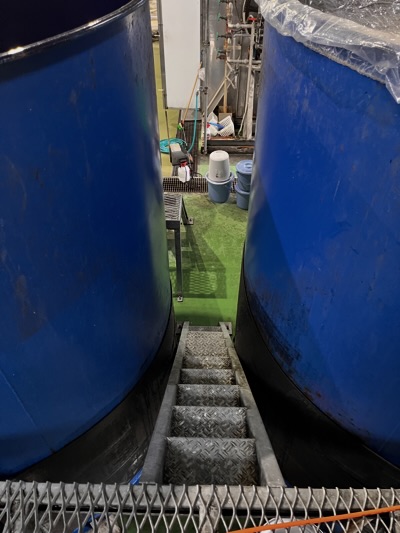
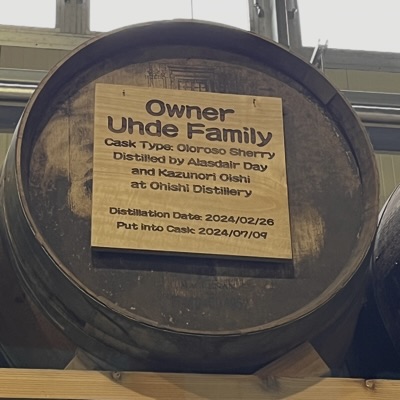
We also climbed up and down and all over the place. Later, I spotted an octave cask that was freshly arrived and we got to see various other special casks, even some owned by local whisky bars, something we also saw at Ontake the day before. Oishi is definitely another up and coming whisky producer in Kyushu.


Japanese rice whisky must be having a moment and maybe the entire Japanese whisky industry is, witness me going on a tour with several other enthusiasts. I didn’t do much research on individual distilleries prior to booking this tour and this one wasn’t even on the last itinerary I was sent, but I had no trouble finding bloggers reviewing this whisky, not sure how many have ever toured this distillery.

I could not find a video from Charles until later on in the evening when we visited a whisky bar. At Oishi, they had a piece of equipment labeled an iStill which looked really new and I’ve since found out is made in the Netherlands. I think they plan to use it to make small batch whisky but potentially other spirits. Neither Charles or I had seen one of those before, and we’ve seen some things. The manufacturer’s website has more information than I could ever hope to convey, I think we got a one sentence or less explanation, but yes that is a square whisky still.
Kumamoto Whisky Bars
Fukuoka may be more famous for whisky bars. In the book I’m reading, a character said they have the largest entertainment district in Japan. I know I was surprised how big Fukuoka was. When I lived in Japan it was in Toyohashi, which also seems to have more bars than I remembered. Tokyo of course may have the most bars in the world, I would not want to bet against Tokyo.

Some bars in Japan, you must make reservations for and some are more like private clubs and you need an invitation, you just can’t walk in off the street. The two bars we visited were known as Bar Masquerade and Bar Amber. We visited Bar Amber first on the night we arrived, it is quite well lit and based on my photos I had three drams including one from the Scotch Malt Whisky Society.

At Bar Masquerade, I think I also had three drams. The bar top at Bar Amber was this huge slab of burled wood, the bar top at Bar Masquerade had roses embedded in it, you’ll have to decide for yourself which is more photogenic. The proprietor is on Istagram as @suehiroyasutaka3
Fukuoka
Our final three nights of the tour were spent in Fukuoka, a city I know much more about since visiting. The hotel we stayed at caused us some confusion and Hakata station was also much bigger than the train stations in Kagoshima or Kumamoto. The end result was a little less sleep, we also twice tried to get into one Izakaya but could not. In the end an alternate restaurant was found both evenings and everyone was able to leave town on time, but before that we toured three more distilleries and visited two famous whisky bars.
Shindo Distillery
The journey to Shindo Distillery also known as Shindo Lab from Fukuoka was quite long, but perhaps not as long a journey as the journey the next day. We took a variety of means of transport including a train, a cab, and a bus. The distillery itself was new and modern. Our tour was conducted by Michiaki Shinozaki and we got to meet his sister and father who happened to be in town. The reason we got such a high profile tour guide was the date we visited and key staff being elsewhere.

Once again we were allowed to go most everywhere and film everything, but there was one top secret piece of equipment we were not allowed to photograph, so that is all I’m going to say about that. The equipment at Shindo was made by a Japanese company called Miyake which actually made a lot of the equipment we’d see at previous distilleries. I believe Mars, Kanosuke, Hinokami, and Ontake all had whisky stills made by this firm, they are the major supplier of stills made in Japan.

Shindo also has roots in sake and shochu production and we actually saw another one of their facilities as we were driving through the countryside. 88 Bamboo has already written about this distillery and if you’d been checking all the links I’ve been sharing they have visited a number of the distilleries we toured, so I could use their account to bolster my own memory.

One unique thing for this tour, was the opportunity to handfill a bottle. I never did this, nor did I do it Scotland. I stuck to my ethos of trying to travel light, but we did all sample many drams including some newmake and single casks. Some people on the tour even sampled some other spirits. It was also another busy day for the gift shop employees. I bought a 200ml bottle. Minis are not common at Japanese distilleries but sometimes you can get a 200ml to take home as a souvenir or as omiyage.

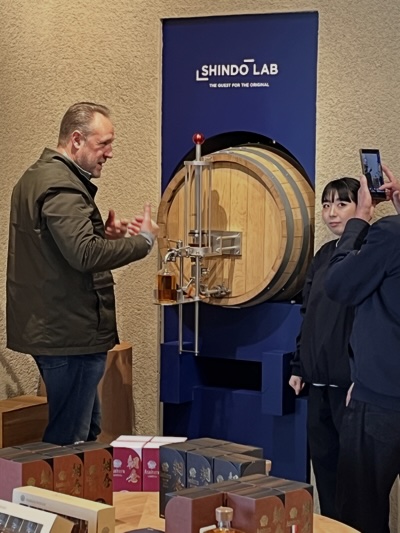
Kuju Distillery
This distillery is in Kuju, this matters as I think this was the longest we spent riding in a jumbo taxi. Somehow I got the front seat this time and dutifully took pictures of the countryside. You’ll have to visit Flickr to see them all.

Kuju Distillery was another popular stop on this tour. Our tour was conducted by the founder and CEO himself, Mr. Shoji Utoda. Once again we pretty much had the run of the place as he specifically opened it up on the weekend so we could tour his distillery. We got to try several single casks whiskies. We also got to try the sour beer and climb over all the equipment.

The stills at Kuju are from Forsyths, something I got several good pictures showing off. These stills were made in Scotland to the specifications of Mr. Utoda. Determining the size of your primary still and low wines still, as well as the length and the line arm and whether it slopes up or down are key decisions when building a whisky distillery. You can alter the yeast and barley, but you are stuck with the water source you choose and Kuju apparently has excellent water.

These were not the only stills from Forsyths we saw while in Japan. Chichibu also uses stills from Forsyths. Again I never took detailed notes on production batch size, but this distillery was smaller than some we toured, but I’m not sure it had the lowest production but then again it might.

This was also a really surprising visit as we came a long way and were not disappointed. There was even talk of us pooling our funds to buy our own cask, but that was deemed impractical. Kuju is really a long way from Calgary so I wouldn’t be able to visit my cask very often and neither would anyone else on the tour. We did see some casks which were bought by people including the owner of Bar Higuchi with whom Mr. Utoda founded Whisky Talk Fukuoka.

We also got to see the very first cask laid down, something we got to see at Oishi Distillery as well. This cask has the signatures of various people who helped set up the equipment, getting it up and running so Kuju could begin whisky production. Mr. Utoda also made us “brand ambassadors” I’m not sure how official my role is, but you should try and find some Kuju whisky. He is actively looking for people who do want to buy their own single cask, I can put you in touch, his card is on my desk. I only ended up buying a 200ml bottle, not an entire cask of whisky, but Kuju is definitely another up and coming Japanese whisky producer in Kyushu Japan.
Hikari Distillery
Last but definitely not least, we visited Hikari Distillery. This might have been a last minute addition as they had to open the distillery up on Sunday just for us! The owner basically lives on site and he and Tomoko Nagasue were our gracious hosts.

We were treated to tea and sweets then we toured the facility. Mr. Naoki Mitsuyasu personally climbed up to serve us right from the cask. It was a bit precarious but I believe everything turned out alright.
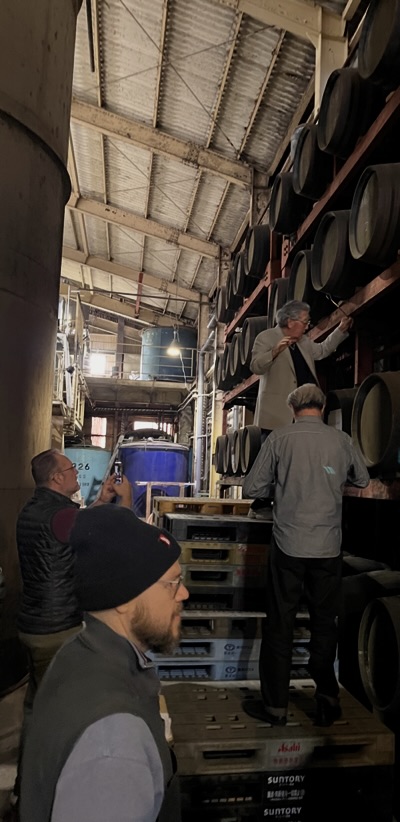
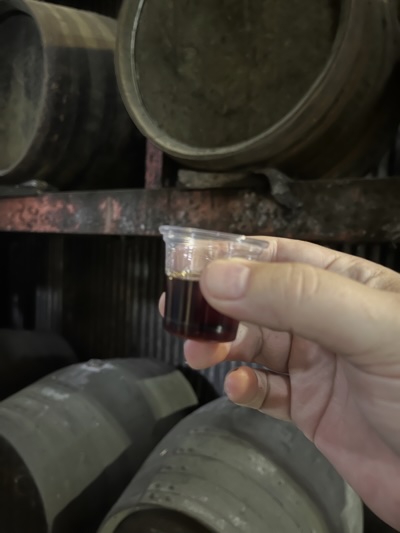

We saw many casks of shochu and of course we saw the stills used to make the shochu. At the end of the tour we were served even more tea and then gifted a bottle of our very own. I don’t know if anyone has tried it, I plan to save my bottle for a special occasion. This company may also make Hakata whisky if the Internet is to be believed but it might be made at another location now.
After our one of a kind personal tour we said our goodbyes to our hosts and walked back to the train station, we went back to Fukuoka and spent our final night together eating and drinking.
Fukuoka Whisky Bars
As mentioned earlier, Fukuoka has a very big and busy entertainment district. We visited Bar Higuchi after our tour of Shindo Lab and then the diehards may have visited Bar Kitchen two nights in a row. Both are very well known. Higuchi-san even appears in a Manga comic which you can view if you visit the bar. He may always wear a white suit. We actually got in a little bit of trouble when we laughed too hard at one of my jokes, but I don’t think we were banned for life, we were just “shushed”.

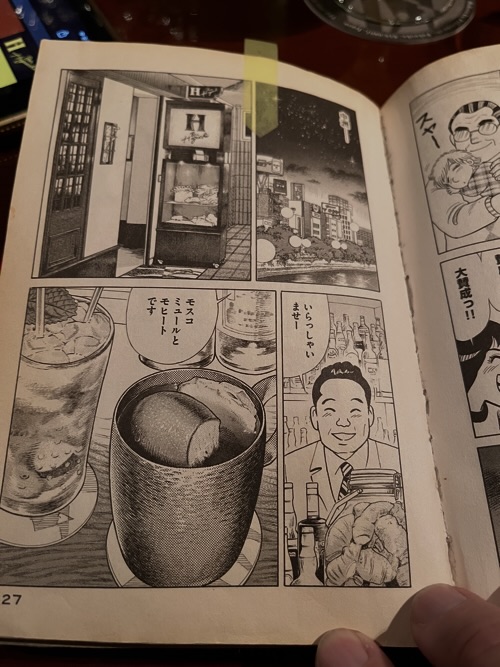

Here is someone else’s account of visiting Bar Higuchi.
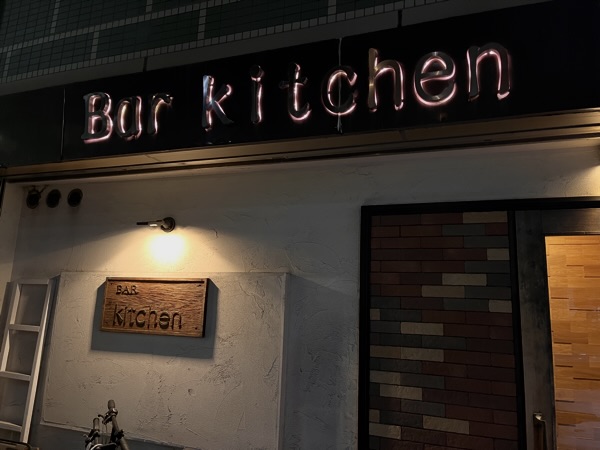
Bar Kitchen may be even harder to get into so our technique was to go in two or so at a time, to disguise the fact we would take up seven seats at the bar. We spent our last night together here and although it was a struggle I did manage to buy a round. I believe it was a single cask Mars Tsunuki similar to the bottle we tried to buy at the distillery, however this one was a Calvados cask not a Mizunara cask. For the record, Mizunara is a type of oak found only in Northern Japan while Calvados is a type of brandy made in Normandy.

Some random blogger thinks this is the greatest bar in the world. You can go argue with that blogger, they haven’t updated their blog in almost ten years.

The next morning I did see some of my fellow travellers though some had to get up even earlier than me. I had bought a shinkansen ticket to Nara, well a shinkansen ticket to Shin Osaka. If you made it this far and want to leave a comment, I double dog dare you. This blog post is over 6000 words so there must be something you object to. If you want to read about me touring whisky distilleries in Scotland or my second trip to Hokkaido, you know what to do. I saved those links for the last paragraph.
This entry was originaly posted on , it was last edited on and is filed under: Travel and tagged: Japan, Tour, Whisky.